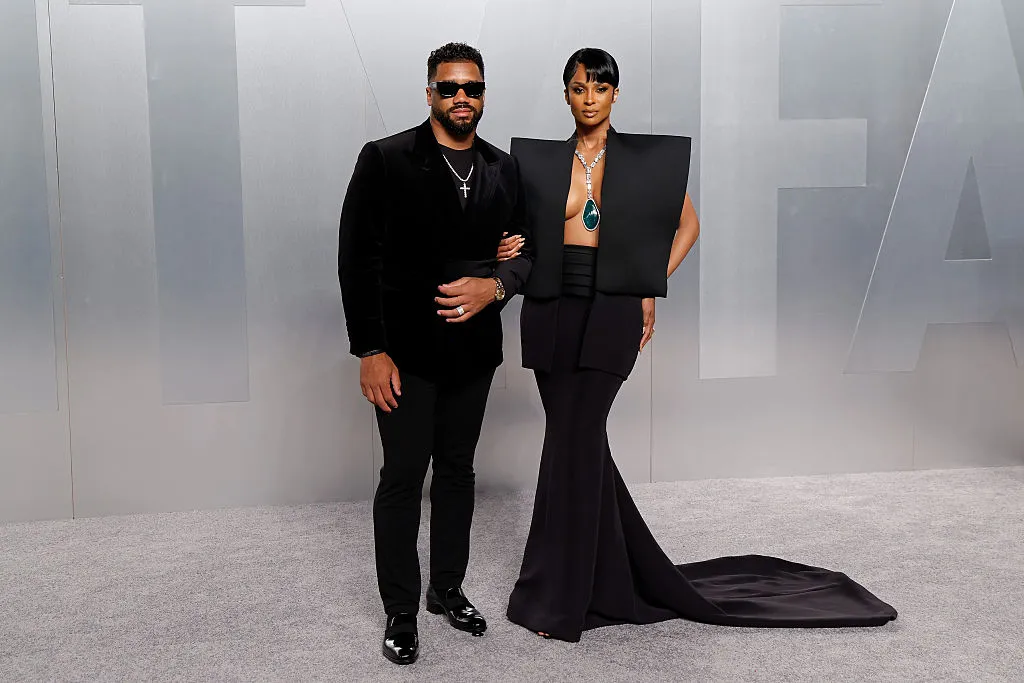
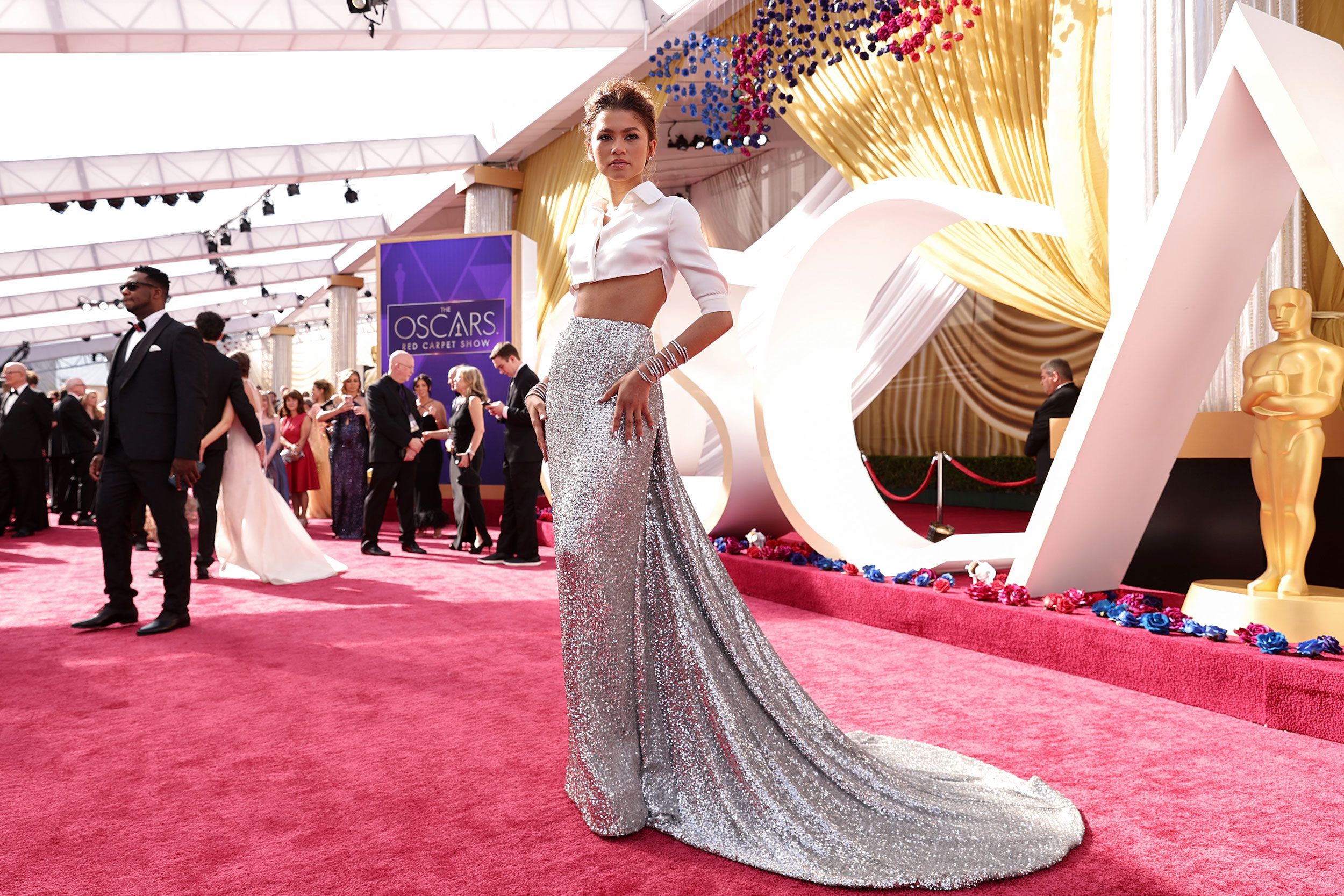
The Oscars red carpet looks like one glamorous stroll, a few flashes, maybe a twirl, and then inside for the big show. But if you have ever wondered how a star ends up in a perfectly tailored gown that somehow survives stairs, seat time, and a surprise press scrum, here is the truth: stylists are basically running a months-long campaign with fabric as their strategy and safety pins as their backup plan.
Below is the ultimate, realistic timeline of how celebrity stylists prep for the Academy Awards, from early vibes to the final “do not breathe near the hem” moment.
6 to 10 weeks out: Strategy
Long before anyone is picking earrings, a stylist is asking the big-picture questions that shape everything:
- What is the story? A first-time nominee moment reads differently than a legacy icon return.
- What is the talent promoting? A performance, a film, a comeback, a brand partnership, a new era.
- What are the boundaries? Comfort level, body-consciousness, mobility needs, and personal style lines they will not cross.
- What is the “camera reality”? Height, proportions, posture, how fabrics photograph under harsh flash, and what silhouettes move well.
This is also when the stylist will map out the entire awards weekend: pre-parties, the ceremony, and at least one after-party outfit, sometimes two if there is a quick change involved.
5 to 8 weeks out: Mood boards and outreach
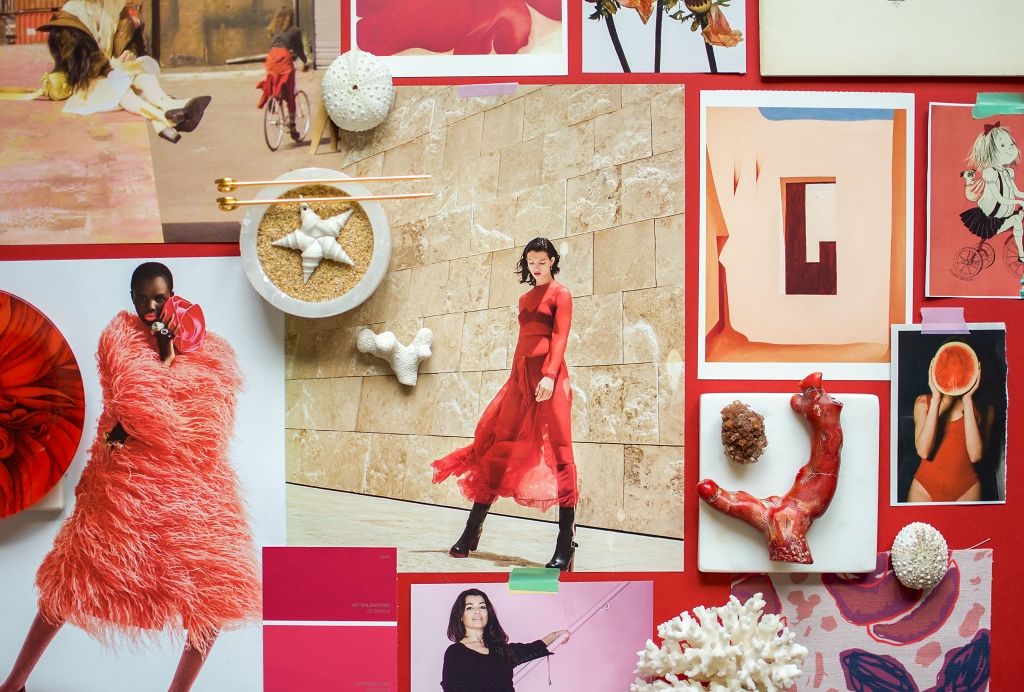
Stylists build mood boards the way directors build shot lists. The references can include runway looks, vintage red carpet moments, editorial spreads, and even non-fashion prompts like architecture, old Hollywood lighting, or a color palette pulled from the nominee’s film.
Then comes the relationship-heavy part: outreach to fashion houses, ateliers, and brand PR teams to request loans, reserve runway pieces, or begin custom conversations. This is where a stylist’s credibility and track record matter. Top brands want their pieces on the right person, at the right event, photographed from every angle.
What stylists send (and why it matters)
- Event details: Date, call time, carpet time, and any required dress codes.
- Client stats: Height, typical sizing, shoe size, and sometimes measurements.
- Press expectations: If the star will do a full press line, those photos are everywhere.
- Style brief: The vibe and what is off-limits.
And yes, sometimes it is not just “Can we borrow this gown?” It is “Can you make a version of this that actually fits her proportions and survives sitting for three hours?”
4 to 6 weeks out: Pulls and first fittings
This is when the pieces start arriving, often in garment bags that look like they belong in a museum. If the look is custom, the brand may send sketches, fabric approvals, and embroidery concepts for sign-off. If it is a pull, the stylist might have multiple options on standby because what looks perfect on a runway model can behave very differently under flash photography and real movement.
The fitting is not just about fit
The first try-on is also a camera test. Stylists are watching for:
- Flash issues: Sheer panels that read more sheer than expected, reflective beading that blows out in photos.
- Movement: Can she walk, sit, and turn without the look fighting her?
- Construction: Strap placement, bodice support, zipper strength, and whether the hem will snag.
- Comfort: A look that hurts is a look you can see on someone’s face.
3 to 5 weeks out: Tailoring
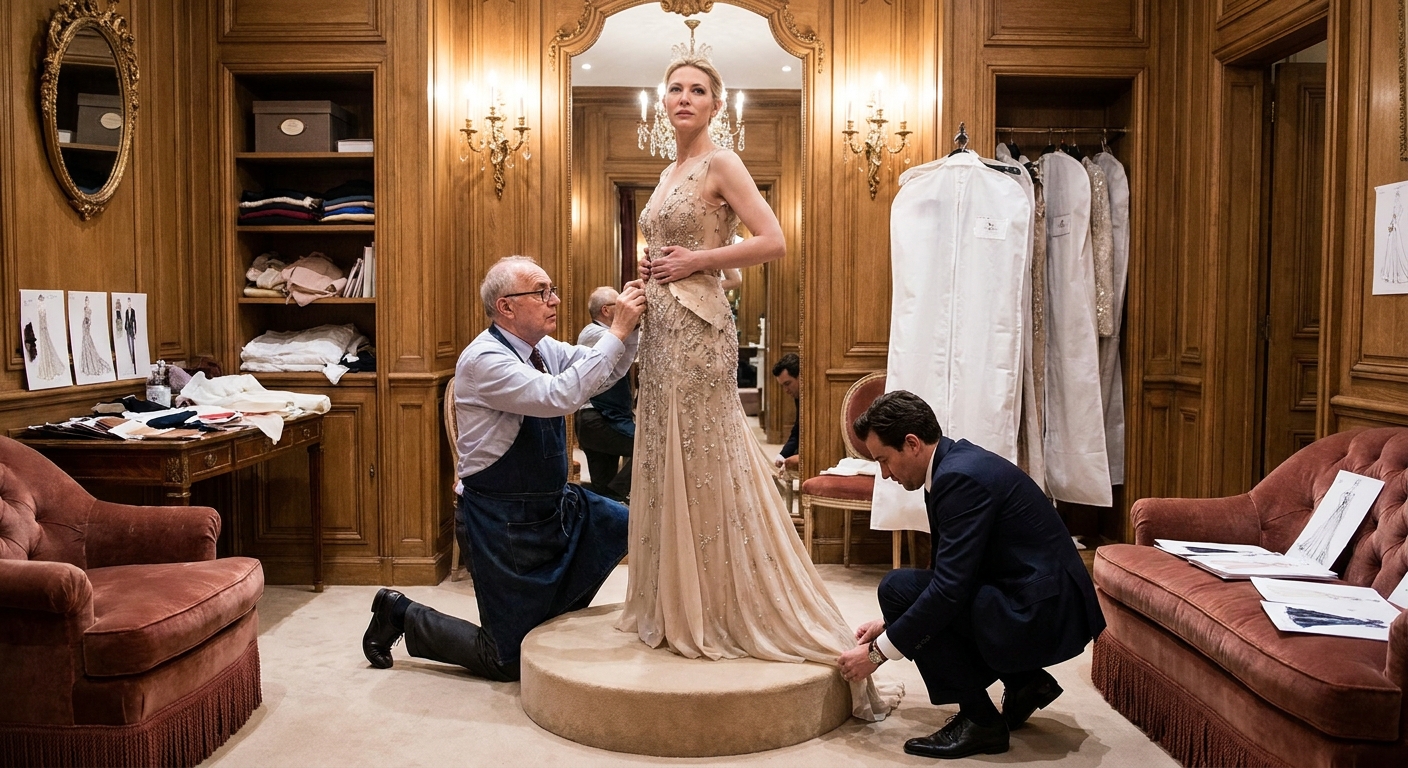
Once the dress is chosen, tailoring becomes the main event. For custom looks, this is when the atelier is doing multiple rounds of adjustments, sometimes across cities, time zones, and very tight schedules.
For pulled looks, many fashion houses allow only certain alterations, and the stylist and tailor have to work within those boundaries. Hemming, taking in seams, adding support, and subtle reshaping are common. Anything that changes the integrity of the garment can require brand approval.
Common tailoring upgrades you never see
- Bust support: Internal corsetry, cups, and hidden elastic.
- Weight distribution: Bustles, snaps, or micro-weights to keep fabric from flipping.
- Anti-slip: Grip strips so a strapless neckline stays put.
- Reinforcement: Extra stitching at stress points like zippers and side seams.
2 to 4 weeks out: Accessories and shoes
Accessories are not an afterthought. They are a technical plan.
Stylists will line up jewelry pulls, often from major maisons, and coordinate insurance, security, and transport. On a night like the Oscars, jewels are frequently escorted, logged, and handled with an attention to detail that would make any museum registrar proud.
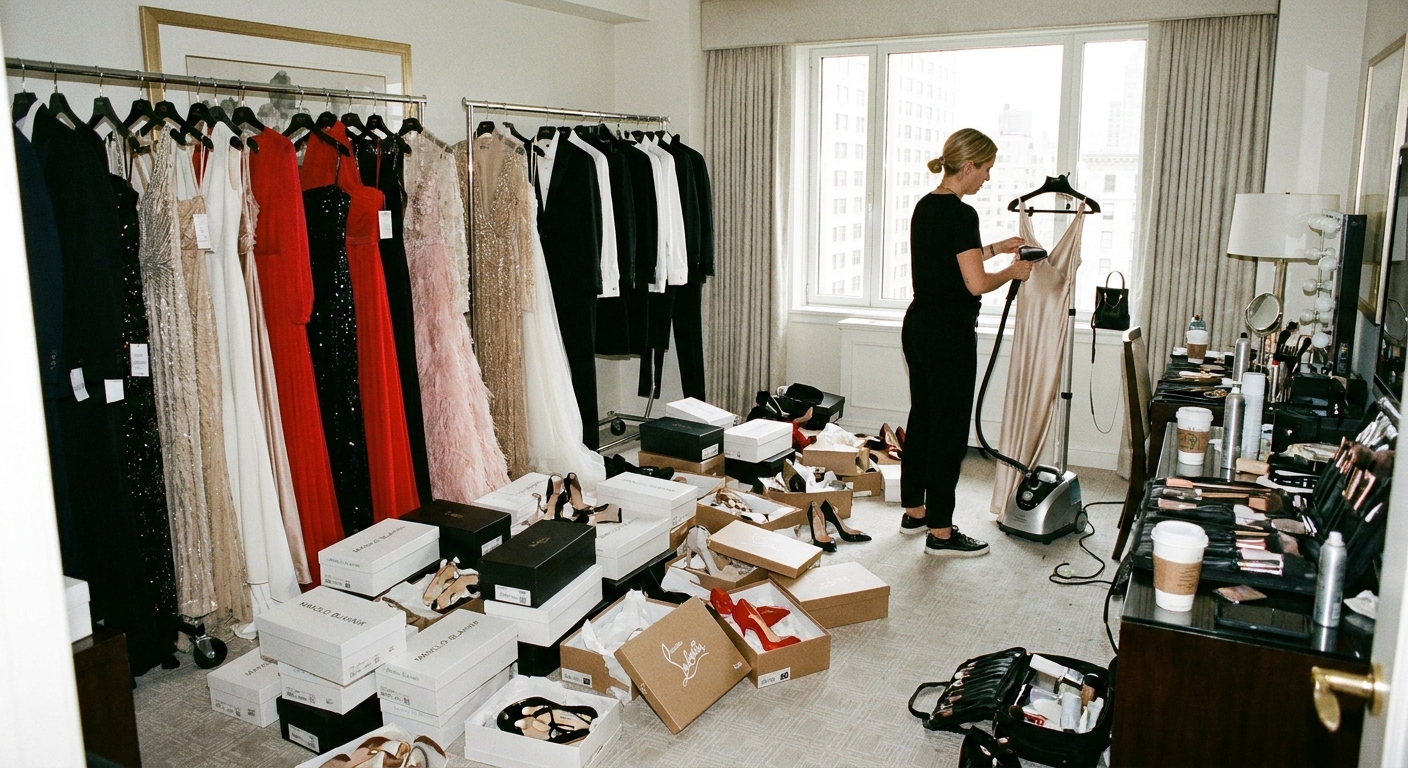
Shoes are their own storyline. The wrong heel height can ruin a hemline and the wrong fit can turn a red carpet into a limping situation by minute seven. Most stylists will test multiple pairs, plus backups, plus “just in case we need a quick swap after photos.”
10 to 14 days out: Beauty alignment
Oscars glam is a team sport. Around this window, the stylist aligns with the hair stylist, makeup artist, and sometimes the manicurist to make sure the whole look is cohesive.
Key decisions happen here:
- Neckline vs. hair: Updo to show jewelry, or hair down to soften a structured dress.
- Makeup finish: Matte, dewy, classic, bold lip, smoky eye, and what reads best under flash.
- Nail color: Sounds small, but it is in every close-up.
This is also when a stylist might request a mini screen test. A quick iPhone flash photo can reveal issues that a mirror will not.
7 days out: Final fitting and backup plan
The final fitting is where details become obsessive, because they have to. Stylists will check the look standing, walking, sitting, and turning. They will practice the “pose moments” too. Hand on hip, slight pivot, train placement, the whole thing.
What goes into an Oscars styling kit
- Fashion tape and double-sided body tape
- Safety pins in multiple sizes
- Mini sewing kit with matching thread
- Lint roller and fabric brush
- Steamer or wrinkle release spray (fabric-dependent)
- Scissors and tiny snips
- Heel grips and blister pads
- Backup earrings and a spare clutch option
It is not paranoia. It is preparedness. Fabric is unpredictable, and cameras are forever.
48 to 24 hours out: Travel and protection
If the star is traveling, the look travels like it is a VIP, because it is. Stylists coordinate transport, sometimes hand-carrying pieces, sometimes working with courier services, and always keeping garments protected from wrinkles, humidity, and surprise spills.
On-location, there is often a quick check fitting to make sure nothing shifted in transit. And yes, people absolutely plan meals around wardrobe. Red sauce and ivory satin do not belong in the same sentence.
Oscars day: The sprint
This is the part everyone imagines, and it is somehow even more intense than it looks.
Morning to early afternoon
- Confirm the schedule: glam call time, transportation, carpet arrival.
- Do a final steam and hanger check.
- Prep accessories so everything is paired and ready.
Glam time
- Hair and makeup begin, often hours before the dress goes on.
- The stylist monitors neckline and jewelry planning so nothing conflicts with hair placement or makeup transfer.
Getting dressed
- Dress goes on late to protect it.
- Final tailoring tweaks happen in real time: tape, pins, quick stitching.
- Jewelry is placed and secured. Photos happen immediately for documentation.
Red carpet
Stylists manage train placement, ensure the client feels confident, and keep the look camera-ready through every stop. It is part fashion, part calming presence, part logistics wizard.
There is a reason the best stylists are equal parts creative director and crisis manager. The goal is not just to look stunning. The goal is to feel steady in a moment the entire world is watching.
After the carpet: Returns and credits
Once the flashbulbs fade, there is still work to do. Loaned pieces must be returned in pristine condition. Custom looks are archived or stored. Brands need proper credits for press photos. And the stylist is already thinking about what the internet will say in the morning, and how to keep the narrative kind, accurate, and fair to the person wearing the look.
Because at the end of the day, the best Oscars style moments are not just about a dress. They are about a human being stepping into a big night feeling like the best version of themselves.