
When a celebrity shows up with a shaved head, the internet does what it does: spirals. Is he sick? Is he filming something? Is he “going bald” on purpose?
John Cena is a perfect example of how fast hair speculation travels. One new look, one candid angle, one red carpet under harsh lighting, and suddenly everyone is diagnosing the situation from a thumbnail.
Here is what is actually useful to know, even when the headline is mostly noise: a shaved scalp can be a completely normal pre-procedure step for modern hair restoration, especially FUE (follicular unit extraction), which is increasingly what people mean when they say “hair transplant” today.
So instead of treating a shaved-head moment like a plot twist, let’s decode the mechanics. If you ever see a shaved-head “reveal” tied to a transplant narrative, it is often the first chapter of a process, not the ending.

Why shaving happens
For FUE hair transplants, surgeons often prefer clear access to the scalp to do two precision tasks:
- Harvest donor follicles from the “donor area,” typically the back and sides of the head where hair is often more resistant to pattern thinning.
- Implant follicles into areas that are thinning or receding, like the hairline, temples, or crown.
Shaving makes it easier for the medical team to see follicle angles, work cleanly and efficiently, and reduce the chance of tangling or damaging existing hair during extraction and placement. It can look dramatic, especially on someone whose image is usually camera-ready, but in hair restoration practice it is closer to rolling up your sleeve before a blood draw than a “new era” haircut.
Quick nuance: shaving is common, but it is not always required. Many clinics offer partial-shave or “no-shave” FUE for selected cases. It depends on graft count, hair length, and what the surgeon can do safely and consistently.
Also: donor hair is not automatically “forever.” Some people have patterns where the donor zone can thin too (for example, retrograde alopecia or diffuse unpatterned alopecia). That is why good clinics screen donor stability carefully before recommending surgery.

What FUE is
Let’s demystify the buzzwords. FUE stands for follicular unit extraction. In this method, a surgeon removes tiny follicular units (small groupings of hair follicles) one by one from the donor area and places them into the areas that need coverage.
There is also FUT (strip), where a thin strip of scalp is removed from the donor area and dissected into grafts. Both are legitimate techniques, and which one is “best” depends on the patient, the plan, and the surgeon.
What it is
- A surgical procedure typically done with local anesthesia (you are usually awake).
- A relocation of your own follicles from one area to another.
- A results process measured in months, not days.
What it is not
- It is not an instant “hairline overnight” situation.
- It is not a guarantee that every single graft grows perfectly.
- It is not a cure for the underlying genetic process of hair loss.
That last point matters for understanding why someone might choose multiple sessions over time and why some people combine surgery with treatments meant to slow ongoing thinning.
Why round two happens
When people hear “second hair transplant,” they sometimes assume the first one failed. That can happen, but it is far from the only explanation.
A second procedure is frequently part of a long-term plan for someone with ongoing hair thinning. Common reasons include:
- Continued genetic hair loss: Transplanted hairs are typically more resistant to thinning, but surrounding native hair can keep miniaturizing over time.
- Density goals: The first procedure may prioritize rebuilding a natural hairline or covering key areas, while a follow-up adds fullness once growth is confirmed.
- Refining a hairline: Small changes to shape and temple points can make a big difference, especially under harsh lighting.
- Coverage expansion: Some people address the front first, then the crown later, depending on progression and donor supply.
- Camera reality: High-definition lighting, sweat, water scenes, and tight close-ups can reveal thinning that everyday styling might hide.
For public figures, image is part of the job. What is notable, when it happens, is how unglamorous the in-between stages can look.
Growth timeline
If you see a shaved-head moment and think, “Okay, so when does the hair appear?” you are asking the right question. Hair transplants are famous for one frustrating truth: the best results are slow.
Typical timeline
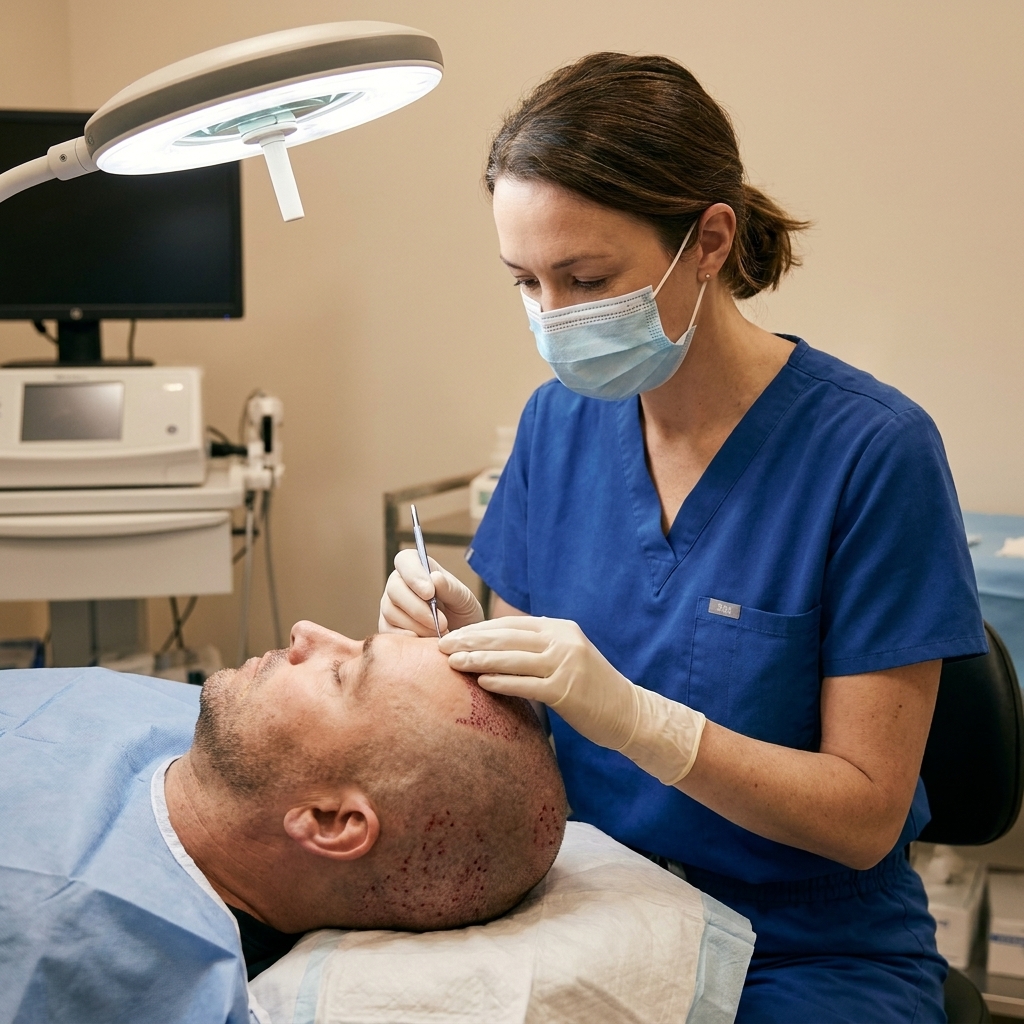
- Days 1 to 10: Redness, mild swelling, small scabs, and visible implantation sites are common. Many patients look like they have a very short buzz cut with tiny dots.
- Weeks 2 to 8: Transplanted hairs often shed. This can be alarming, but it is a well-known part of the growth cycle for many patients.
- Months 3 to 6: New growth typically starts to become noticeable, often fine at first.
- Months 6 to 12: Density and texture improve gradually. Many people consider this the main reveal window.
- Months 12 to 18: Final maturation can continue depending on the person and the areas treated.
General post-op reality check: most people have a short period where the scalp looks red or “spotty,” and many clinics advise avoiding sun exposure and friction on the grafts early on. Some patients can wear a loose hat after a certain point, but the timing is clinic-specific, so it is always worth following the surgeon’s instructions.
Important note: This is general education, not personal medical advice. Individual recovery varies based on technique, graft count, scalp health, and post-op care. A board-certified hair restoration surgeon is the right person to give personalized expectations.
Why it goes viral
A shaved-head moment is not just celebrity gossip. It hits three internet pressure points at once.
1) The “Is he okay?” reflex
A sudden shaved head can trigger illness speculation because people associate abrupt hair changes with medical treatment. That is exactly why context matters.
2) Men are talking about hair loss
For years, hair restoration lived in the whisper zone. Now it is becoming more normalized, especially as more public figures talk openly about the process. That shift makes it feel less like a secret club and more like healthcare plus aesthetics, which is what it is for many people.
3) The “before” is the loudest moment
The irony of hair transplants is that the most dramatic-looking part can be the beginning: shaved scalp, visible follicles, awkward regrowth phases. The beginning is also the most shareable.
Public image
When celebrities treat cosmetic procedures like routine maintenance, it reflects a broader kind of honesty about aging in public. And let’s be clear: choosing hair restoration does not mean someone is insecure or vain. It can also mean they are practical. If your face is your brand, and you want to feel like yourself on camera, you make the choices that align with your life.
The shaved head is not the outcome. It is the setup.
Quick FAQs
Does shaving mean the procedure is imminent?
Often, yes. Shaving is commonly done shortly before the procedure, sometimes the day of and sometimes right before. Timing varies by clinic protocol.
Can you do it without shaving everything?
Sometimes. Some clinics offer no-shave or partial-shave options for certain patients, but full shaving is still common, especially when a larger number of grafts are planned.
Is a second transplant safe?
It can be, but safety and suitability depend on donor hair availability, prior procedures, scalp condition, and surgeon assessment. Reputable surgeons evaluate donor supply carefully because it is finite.
How long does someone look bald?
Many people look shaved or closely buzzed for a while, and then there is typically a months-long regrowth journey. The final look is not immediate.
Do medications matter after a transplant?
Often, yes. Many patients discuss options like finasteride or minoxidil with a clinician to help stabilize ongoing loss in non-transplanted hair. It is not one-size-fits-all, and it is worth reviewing risks and benefits with a qualified professional.
The takeaway
Celebrity hair rumors tend to flatten a long, technical process into a single “gotcha” moment. In reality, a shaved scalp is often a straightforward pre-op step for an FUE hair transplant, and a second session can be part of a normal long-term strategy, not proof that anything “went wrong.”
Treat the shaved-head phase for what it usually is: a practical step on the front end, followed by a slow reveal that takes months, not minutes.