
Ted Danson has always had that rare kind of charm that reads as effortless. But what lands in his recent CBS Sunday Morning profile is something more useful than charisma: a picture of longevity as a set of choices. The segment, reported by Tracy Smith, is reflective, lightly funny, and quietly work-focused. It plays less like a victory lap and more like an honest check-in with an actor who still treats the job like a craft.
If you came to the piece expecting a neat list of rules, it does not really work like that. Danson is not selling a system. He is talking about what still keeps him engaged: scripts, people, the pleasure of getting better, and the steadiness that comes from a life built around real relationships instead of constant reinvention for its own sake.

The setting
What makes this profile feel real is that it stays small and specific. Smith keeps the conversation grounded in work: how Danson approaches roles now, what he is still chasing, and what it means to keep showing up after you have already had more than one defining era.
The segment moves through familiar touchstones, then keeps returning to a quieter question: how do you stay open to the world when it would be easier to shrink it down? Danson’s answer, in effect, is that you do not wait to feel young again. You stay in motion.
What he says
Danson does not arrive with a tidy set of commandments. He circles the same themes from a few angles, which is part of why it feels lived-in. He talks like a working actor talking about work, time, and the people who make both feel worth it.
He comes across as someone who still likes the process: the rehearsal room energy, the rhythm of collaboration, and the daily discipline that keeps you honest. The vibe is not “I cracked the code.” It is closer to “I found what keeps me awake, so I protect it.”
Four takeaways
Danson never presents a formal framework. But if you listen for the through-lines, four ideas keep surfacing, and they translate cleanly into day-to-day life for an actor or for anyone trying to stay alert to their own life.
1) Stay curious
Curiosity sounds sweet until you remember it is basically a commitment to mild discomfort. Staying curious means you keep learning, keep meeting new people, keep asking better questions, and keep letting the world surprise you. It is the opposite of locking your days into only what you already know you are good at.
In the profile, his long run reads less like a straight line and more like a set of choices that kept him from hardening into one type. Older audiences still see Cheers in the grin. Newer audiences know he can carry high-concept comedy while still landing the human beat underneath it. That range does not happen by accident. It comes from staying interested.
2) Keep working
This is not “never retire” in a grind-yourself-into-dust way. It is closer to “do not retire from purpose.” In the segment, work is framed as a connective tissue. It keeps you around people. It keeps you reading, listening, adjusting, trying again. That matters, especially as life naturally narrows if you let it.
If you want a concrete translation: keep a project going that requires collaboration or accountability. That can be a show, a class, a volunteer commitment, or a recurring creative practice. The point is to keep showing up somewhere that asks something of you.
3) Nurture relationships
This is the takeaway that makes the rest feel grounded. A career can give you momentum, but relationships give you stability. The segment’s emotional center is not fame as the prize. It is connection, the kind that keeps you steady when the work is thrilling and when it is not.
Mary Steenburgen is part of that steadiness. The profile treats their partnership as lived-in and practical, not performative. They come across as a couple who genuinely like each other’s company, who show up, who keep the home base strong. In an industry that loves to turn everything into a season, that kind of continuity reads like its own quiet achievement.

4) Make aging intentional
This is the big idea the segment keeps gesturing toward, even when it is not packaged as a slogan. Aging is not only something that happens to you. It is something you can shape with intention. Not by pretending you are 35, but by deciding what kind of older version of yourself you want to be.
Trim the rhetorical fluff and the question becomes practical: what do you want to make next, what do you want to learn next, and who do you want around you while you do it? When people say the profile feels inspiring, it is because it flips the usual script. Aging is often discussed like a slow closing of doors. Danson’s posture suggests you can keep building new ones, as long as you stay engaged.
The dip
Part of why the active-aging message lands is that it is not coming from someone who coasted smoothly through every era. Like most long careers, Danson’s includes stretches that did not hit the way the marquee titles did.
One example from the mid-2000s is ABC’s short-lived sitcom Help Me Help You (2006). It is not the definitive story of that period, but it is a useful reminder: you can be widely talented, land in the wrong fit, and still find your way back. Not by forcing a comeback narrative, but by continuing to work, staying curious, and being willing to pivot when the material is not right.
The second act
Hollywood loves reinvention stories, but the sustainable ones usually share a pattern. The person does not simply become younger in the public imagination. They become clearer.
Danson’s late-career run is a good example because it is built on choices that match the segment’s themes, especially taking roles that let him play more than one note.
Roles with room
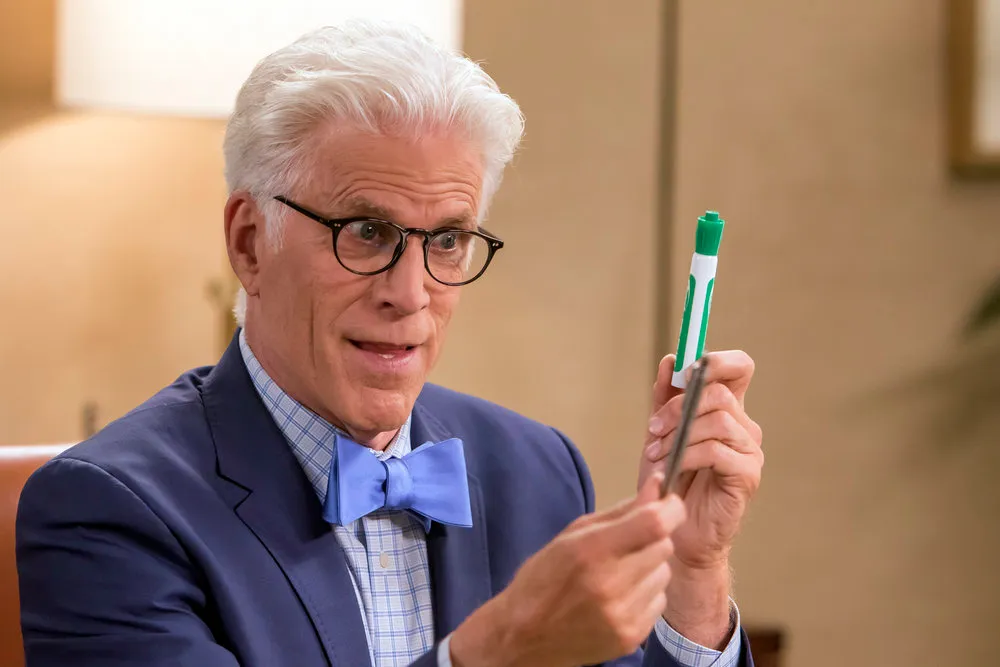
The Good Place is often cited as a turning point for newer audiences. More precisely, it helped introduce him to viewers who did not grow up with Cheers. The role works because it is not just beloved elder statesman. It is charming, complicated, surprising, and central to the show’s engine.
Range matters
Danson has kept his career lively by moving between mediums and tones. The practical lesson is simple: do not let your identity harden around what you were good at ten years ago. Make room for work that stretches you, even if it is not the safest bet on paper.
Support counts
There is something quietly radical about an older Hollywood couple who treat support as part of the romance. Even without turning their marriage into a brand, Danson and Steenburgen’s shared orbit suggests a plain truth: you keep people close who help you stay brave.
Why it works
There is a cultural hunger for models of aging that are not denial or doom. In Hollywood, that hunger gets amplified because the industry has historically been uneasy about letting people age on screen, especially in stories that still center joy, romance, and ambition.
Danson’s Sunday Morning profile offers a counter-narrative: aging can be expansive in a practical, day-to-day way. Stay curious so you do not get rigid. Keep working so you keep growing. Nurture relationships so success does not feel hollow. Treat aging as intentional so you remain an author of your own life.
It is also worth naming the obvious: not everyone gets the same runway, resources, or opportunities as a famous actor. Still, the underlying mechanics translate well at a human scale. You do not need a TV show to practice curiosity, purpose, connection, and reinvention.
And because he is Ted Danson, he delivers it without preaching. Just a steady confidence that you can keep evolving, even after the world has decided it already knows who you are.
Takeaways
- Choose one curiosity habit: Read outside your comfort zone, take a class, watch a genre you avoid, or talk to someone younger without trying to win the conversation.
- Make keep working about meaning: Start a small project with a finish line. A short story, a hobby, volunteering, a training plan. Momentum matters.
- Invest in one relationship on purpose: Send the text, plan the coffee, make the apology, or say the grateful thing out loud.
- Reframe one aging fear: Instead of “I cannot do X anymore,” try “What is the version of X I can do now?” That is the move from decline to design.
FAQ
Did Ted Danson share four rules in the CBS segment?
No. The four points here are takeaways drawn from the profile’s themes and Danson’s broader career choices, presented as a simple framework for readers.
Who interviewed him on CBS Sunday Morning?
Tracy Smith.
What show is most tied to his modern reinvention?
Many fans point to The Good Place as a defining second act for newer audiences, following decades of earlier fame and some uneven stretches in between.
What was the 2006 sitcom linked to a mid-career rough patch?
Help Me Help You (ABC, 2006) is one example people sometimes cite when discussing the less-celebrated stretches between major hits.