Hollywood loves a comeback story, but it rarely happens by accident. When a celebrity scandal hits, most PR teams follow a pretty familiar arc that fans can practically recite from memory: a sudden quiet period, a statement that “addresses” without saying much, a carefully chosen interview, then a slow drip of public appearances until the celebrity is “safe” to be enjoyable again.
One important caveat up front: this is not an official, industry-certified framework. It is a pattern you can spot across many modern controversies, especially in entertainment, where timing, access, and storyline matter as much as the apology itself. The examples below are illustrative of how the playbook can look, not proof of anyone’s specific PR intent.
Not every situation deserves a redemption tour, and not every star earns one. But if you have ever wondered why so many post-scandal moves feel copy-and-paste, it is because there are a handful of repeatable stages that help shift attention from crisis to recovery.
Below are the 7 stages PR teams often use after controversy, with recent examples to show how the strategy can play out in the real world, and why some celebrities skip steps or never fully recover in the public eye.
Stage 1: The Freeze
What fans see
Radio silence. No tweets. No Stories. Comments get limited. Scheduled posts mysteriously disappear. If there was a premiere, it gets “postponed.” If there was a partnership, it becomes “under review.”
What PR is doing
- Gathering facts, timelines, and documentation
- Coordinating with legal, management, brand partners, and the studio or label
- Monitoring sentiment and the key narratives spreading online
- Managing platform mechanics: comment moderation, pinned statements, and what stays searchable
- Deciding whether to respond at all, and how quickly
Silence is not always cowardice. Sometimes it is the only way to avoid a messy, emotional response that creates a second wave of backlash.
Recent example
When Jonathan Majors was arrested in March 2023 in New York City following an alleged domestic dispute, the early days were dominated by legal process, reporting, and statements from attorneys rather than casual social posting. That is “the freeze” in action: minimize variables, avoid off-the-cuff mistakes, and let the situation clarify.
Stage 2: The First Statement ("We Hear You")
What fans see
A notes-app statement, a rep statement, or a short video that feels carefully worded. It often includes some mix of: accountability language, empathy language, and “I am taking time to learn.”
What PR is doing
This is message control. The goal is not to “win” the internet in 90 seconds. It is to contain the immediate fallout and define the central framing:
- Scope: what is being addressed and what is not
- Responsibility: apology, partial apology, denial, or “misunderstanding”
- Next steps: what actions will follow, if any
Recent example
During recurring waves of online scrutiny around Hailey Bieber, one consistent pattern has been selective engagement: occasional clarifying language or a brief acknowledgment, paired with long stretches of restraint. Whether people agree with that approach or not, it reflects a common PR calculation: addressing every micro-controversy can keep the story alive longer than ignoring it.
Stage 3: The Accountability Proof
What fans see
“I am in therapy.” “I am getting help.” “I am stepping away.” Sometimes it is rehab, sometimes it is a treatment program, sometimes it is simply a break from the spotlight with language about mental health.
What PR is doing
PR teams know a statement without action reads hollow. This stage creates a proof-of-action signal that something concrete is happening behind the scenes. It also buys time.
Important nuance: seeking support is not the same thing as accountability, and it is not a substitute for addressing harm. But in media terms, it often becomes the bridge between “public anger” and “public patience.”
Recent example
After multiple public incidents, Ezra Miller released a statement in 2022 referencing “complex mental health issues” and seeking treatment. The response showed both the power and limits of this stage: it can soften the conversation for some people, but it does not erase serious allegations or industry consequences.
Stage 4: The Controlled Interview
What fans see
The sit-down. The longform profile. The “I have something to say” moment. It is usually with a trusted journalist, a friendly outlet, or a platform that can handle nuance without turning it into a punchline.
What PR is doing
This stage is about humanizing without overexposing. PR teams aim for:
- A sympathetic but credible format
- Clear talking points that do not contradict legal realities
- A “one-and-done” feel, so the celebrity is not endlessly litigating the scandal
Recent example
Will Smith used a carefully structured, self-produced Q&A-style video in 2022 to address the Oscars incident, answering pre-selected questions in a direct, sober tone. It is not a traditional interview, but it functions like this stage: one controlled container for the core message.
Stage 5: The Charity Pivot
What fans see
A sudden emphasis on service: donating, volunteering, partnering with nonprofits, or speaking about a cause. The celebrity becomes less “brand” and more “person who cares.”
What PR is doing
This stage is risky if it reads like reputation laundering. Done badly, it triggers the exact reaction you would expect: “Oh, so this is your apology now?”
Done well, it can remind the public of a fuller story. The key is authenticity and consistency. A single photo op will not move the needle. Years of quiet work might.
Recent example
Kevin Hart faced major backlash in late 2018 tied to resurfaced homophobic jokes and tweets, with the Oscars hosting controversy carrying into 2019. Over time, part of his broader public image has included philanthropy and community work. It did not erase criticism, but it helped broaden the conversation beyond one headline.
Stage 6: The Soft Reentry
What fans see
A low-stakes public appearance that is designed to feel normal. A supportive friend outing. A surprise cameo. A fashion moment. A “casual” paparazzi walk that is, in PR terms, not always accidental.
What PR is doing
This is where teams test the temperature. Soft reentry is about measuring whether the public is still furious, simply tired, or genuinely open to moving forward.
- If headlines stay quiet, they escalate to bigger appearances.
- If backlash spikes again, they pull back.
It is also where stakeholder management shows up again. Studios, brands, and collaborators often want proof the backlash has cooled before they attach themselves publicly.
Recent example
After several years largely out of the spotlight following his 2016 divorce, Johnny Depp reappeared gradually through festival appearances and European projects, building a “back to work” rhythm without leading with a big, celebratory relaunch. For better or worse, it is a recognizable version of soft reentry: show up in lower-stakes settings first, then scale.
Stage 7: The Project Anchor
What fans see
The comeback is “official” when there is a project that re-centers the celebrity’s value: a film, album, tour, brand relaunch, or prestige interview tied to something tangible.
What PR is doing
PR teams want a new headline that is not the scandal. A strong project gives media a reason to cover the celebrity without rehashing the worst moment in every paragraph.
But it only works if:
- The project is good, or at least culturally buzzy
- The celebrity does not force audiences to “forgive” them to enjoy it
- The rollout acknowledges the past without turning every press stop into a courtroom
Recent example
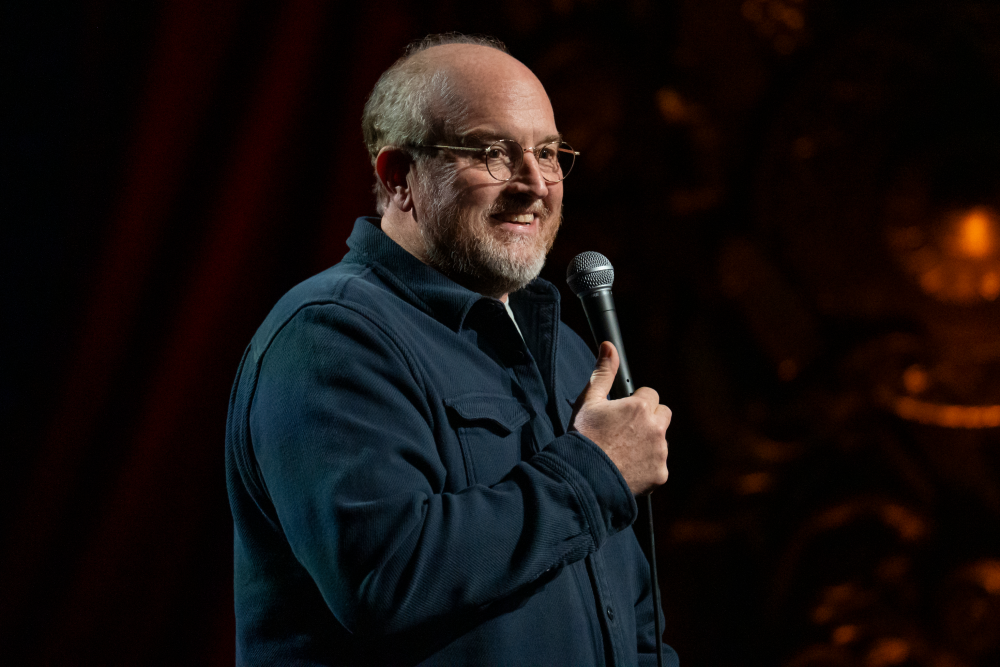
Louis C.K. is a clear example of a comeback that relied heavily on the project anchor: returning to standup through direct-to-fan releases, including a 2020 special, and continued touring. He maintained a career, but the reputation remained polarizing, and mainstream acceptance looks different than it did before.
Why Some Skip Steps
Not every scandal follows the full seven-stage arc because not every celebrity has the same resources, audience, or risk level. And not every controversy belongs in the same bucket. A criminal allegation, an interpersonal blowup, and a decade-old bad joke do not trigger the same playbook or the same public tolerance.
- Legal constraints: ongoing cases can limit what can be said publicly without increasing liability.
- Industry leverage: A-list stars with proven box office or streaming draw often get more second chances.
- Type of controversy: “Rude on set” and “abusive behavior” are not morally or culturally equivalent, and the public reacts accordingly.
- Existing goodwill: If fans already feel connected to a celebrity, they are more willing to wait and see.
Sometimes skipping steps is not strategy. It is simply that the machine cannot support the comeback, or the celebrity does not want to play the game.
Why Some Never Fully Recover
The harsh truth: some public images do not bounce back, even with the best PR money can buy. The reasons are usually a combination of:
- Pattern vs. one-off: A single incident might be “a terrible moment.” Repeated allegations look like a character story.
- Mismatch between apology and harm: A vague “sorry if you were offended” rarely lands when people want clear accountability.
- Victims and impacted communities speaking out: When those harmed are visible, the narrative cannot be easily redirected.
- Timing: A comeback launched too soon can feel disrespectful. Too late, and the audience has moved on.
PR can shape access and messaging. It cannot force trust.
The Takeaway
If you are watching a scandal unfold and thinking, “This feels like a script,” you are not imagining it. These stages exist because they work often enough, especially when the celebrity has a real track record of change and a project that earns attention for the right reasons.
But the most sustainable comeback is not the perfect statement or the perfect interview. It is the slow, unglamorous part: consistent behavior, real accountability, and a public that is allowed to make up its own mind.