
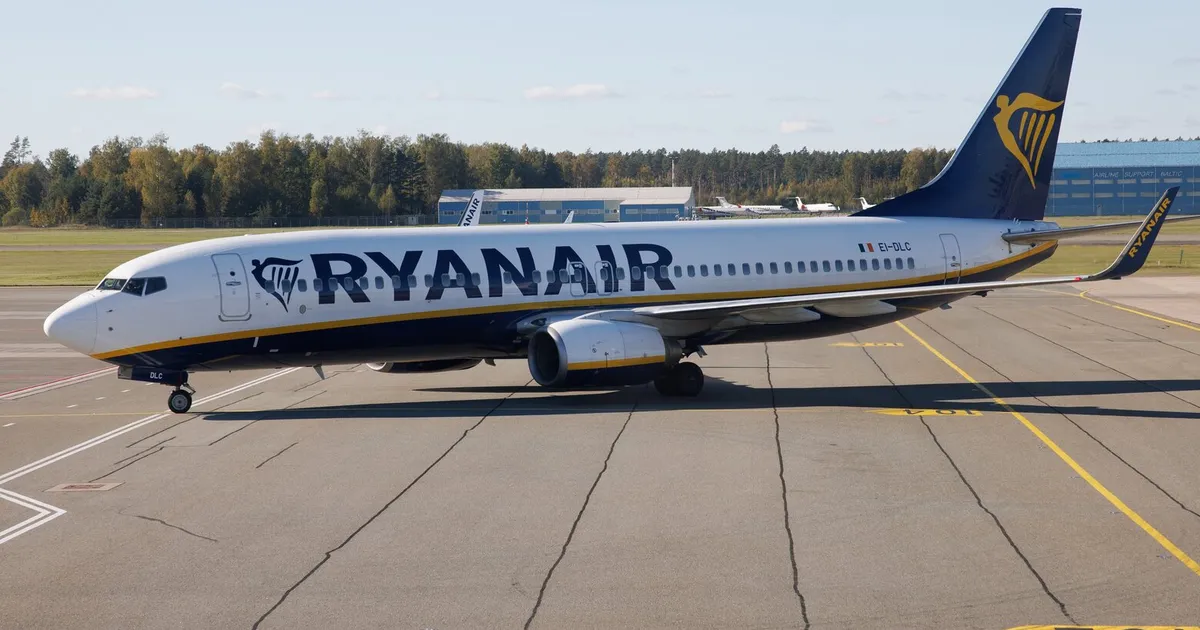
There are plane stories that flash across your feed and disappear in a day, and then there are the ones that stick because they hit a primal fear. This Ryanair incident is firmly in the second category.
The core of what’s been shared publicly comes from the woman at the center of it: Svetlana Grković, who described a terrifying moment mid-flight in which her husband was nearly sucked out of the plane. She said he is “seriously injured and in shock”. And later, speaking about the split-second choice she made to hold on to him, she summed it up with a line that made the story travel fast: “If we die, we die together.”
What we know
Because the most widely circulated details come from Svetlana Grković’s account, it’s worth keeping the confirmed points tight:
- It involved a Ryanair flight.
- Svetlana Grković said her husband was nearly sucked out of the plane during the incident.
- She said he is “seriously injured and in shock.”
- She described clinging to him and said: “If we die, we die together.”
Beyond that, many of the details people naturally want to fill in (what exactly failed, where it happened in the cabin, and what actions were taken minute by minute) are not specified here. If there are official statements or technical findings, they are not reflected in the limited public details above.
What it could mean technically
When people hear “nearly sucked out,” their minds jump straight to a Hollywood version of aviation. But there’s real physics underneath the phrase.
At altitude, airliners are pressurized. If there is a sudden opening or pressure-related failure in the aircraft’s structure, air can rush outward as the cabin pressure tries to equalize. If someone is positioned close to that opening, the airflow can pull them toward it. The force depends on the size and shape of the opening, how quickly the pressure changes, and the person’s position.
Important note: the points above are general aviation context, not confirmed details of what happened on this specific flight.
It’s also worth clarifying the language. “Sucked out” sounds like a vacuum effect, but the practical danger is the rapid outward flow of air during a pressure change and the chaos it can cause in the cabin.
If oxygen masks drop
Not every frightening in-flight event involves oxygen masks. But if they do deploy on any flight, the basics are simple and non-negotiable:
What passengers should do
- Put your own mask on first. You cannot help anyone if you lose consciousness.
- Stay seated and keep your seat belt fastened. If the aircraft is descending, it can be abrupt.
- Follow crew instructions. Even if it feels repetitive, it is designed to cut through panic.
- Do not move toward the affected area. It can put you at risk and slow the crew response.
Masks are meant to provide oxygen long enough for pilots to get to a safer altitude where normal breathing is possible.
Where issues can happen
People tend to imagine a single, obvious failure point. In reality, pressure-related events can involve different parts of the aircraft’s body and fittings, and the public description of what passengers experienced does not always map neatly onto one specific component.
Without an official technical finding, the most responsible framing is simple: something went wrong in-flight in a way that made a passenger feel he was being pulled out of the plane, and the human consequence was severe enough to leave him “seriously injured and in shock.”
Why the quote landed
The reason this story is hard to shake is not the engineering. It’s the human moment inside it.
“If we die, we die together” does not sound like a prepared statement. It sounds like what people say when their body is flooded with adrenaline and their brain starts sprinting ahead to the worst-case scenario. Svetlana Grković’s account put a lot of people emotionally inside that moment, and that is one reason it has resonated so widely.
What happens next
When someone describes a passenger as nearly being pulled out of a plane, the next chapter is usually less dramatic and more methodical: establishing what failed, why it failed, and what needs to change so it does not happen again.
For now, the most important thing we can say from Svetlana Grković’s account is also the most sobering: someone walked away seriously injured, and the people closest to the moment genuinely believed they might not make it through.